
CUSMA Remains in Force, but Businesses Face New Trade Uncertainty As Trade Pact Moves To Continued Review
CUSMA Remains in Force, but Businesses Face New Trade Uncertainty As Trade Pact Moves To Continued Review
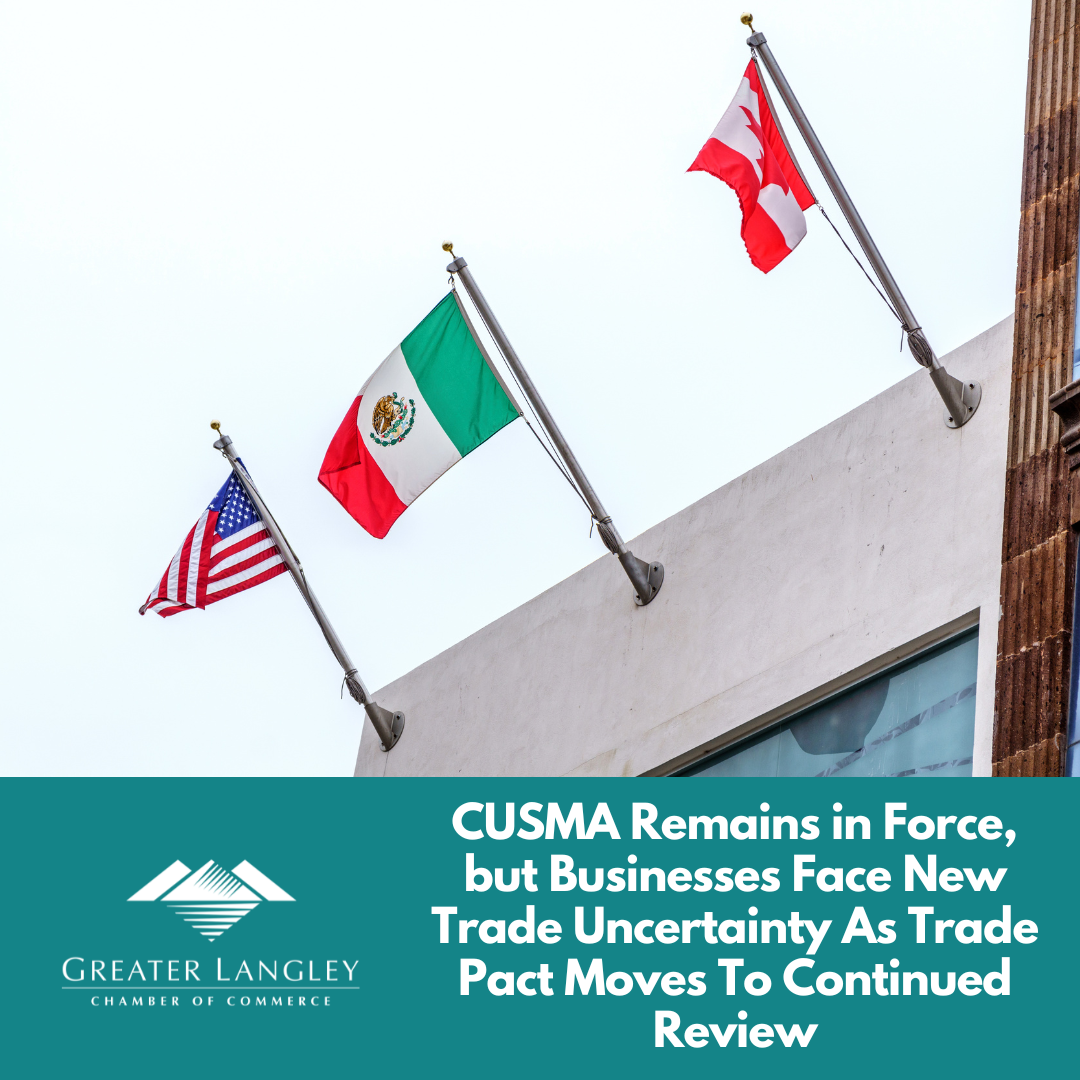
As part of CUSMA’s mandatory six-year review, Canada, the US and Mexico faced a July 1 decision: agree to extend the agreement through 2042, or move into annual reviews until its current expiry in 2036.
Canada and Mexico supported the 16-year extension, but the US declined to extend the agreement in its current form.
The US decision not to extend the Canada-United States-Mexico Agreement in its current form is a serious development for Canadian businesses, but it is not the end of CUSMA or continental free trade.
The agreement remains fully in force. Its tariff preferences, rules of origin and dispute-settlement provisions continue to apply, and businesses can continue claiming preferential treatment for qualifying goods.
What has changed is the level of long-term certainty.
Because the three countries did not agree to extend CUSMA for another 16 years, Canada, the US and Mexico will now enter a cycle of annual reviews and continued negotiations.
The agreement’s current term still runs until 2036, and it can be extended at any time if all three governments agree.
What the US decision means
The US has not withdrawn from CUSMA, and the agreement has not been cancelled.
No new tariffs arise automatically from the decision not to extend the agreement. Langley businesses should continue operating under the existing rules while preparing for a longer period of negotiations and continued uncertainty.
The immediate concern is the risk that repeated reviews, tariff threats and unresolved negotiations make it harder for businesses to plan investments, sign long-term contracts or make decisions about where to locate production.
For many companies, the impact may not come through a tariff applied directly to their own product. It may show up through higher input costs, weaker demand from Canadian customers that export to the US, delayed capital projects or changes to a supplier’s North American production strategy.
What businesses should do now
Businesses should continue operating under CUSMA and make sure they understand how to use its tariff preferences, rules of origin, and documentation requirements.
Companies should also review their exposure to existing US tariffs and identify where customers, suppliers, or inputs could be affected by future changes.
At the same time, this uncertainty reinforces the value of deepening trade relationships beyond the US, including with customers and partners elsewhere in Canada and in other international markets.
The Chamber’s perspective
The Greater Langley Chamber of Commerce believes the government’s priority must be securing a renewed, long-term and predominantly tariff-free agreement that preserves CUSMA as a strong trade framework.
Canada must also avoid an outcome that places Canadian businesses at a disadvantage relative to their Mexican competitors.
The US remains Canada’s most important trading partner – and will remain so -- and getting certainty in that relationship matters deeply to Langley businesses making long-term decisions.
Beyond CUSMA, the Chamber supports growing internal Canadian trade amongst provinces, and continuing to advance export diversification to other international markets.
The July 1 decision did not end CUSMA, but it has opened a more uncertain period for North American trade. The Chamber will work to inform our members, and engage both directly and through the Canadian Chamber of Commerce to push for a trade resolution.